
The UK has tightened its travel rules and social distancing orders as the Omicron variant sparks concern around the globe.
Everyone arriving in the country now must take PCR tests and isolate until a negative result is received.
Here is what UK residents returning home and visitors from non-red list countries will face on arrival, according UK Inbound — a trade group focusing on tourism — and UK Hospitality.
The guidance for travellers returning from red list countries is different as passengers will already have paid for a 10-day stay in a government-approved quarantine hotel.
What happens if you are in a hotel and you test positive?
You must immediately quarantine in your room, minimising all contact with other people.
The same applies if your test is unclear, but with an unclear result, you can take a second test.
To quarantine safely, you should stay in a well-ventilated room.
Do not use communal areas such as restaurants or gyms, and maintain two-metre social distancing.
Exercise must be performed inside the room or in the garden. You cannot leave the premises, so walking the dog is not allowed.
-

A Father Christmas figure holds Covid-19-related hygiene instructions for visiting the Christmas market in Hagen, western Germany. AFP -

People wait to be vaccinated below Albrechtsburg castle and the cathedral in Meissen, Germany. AP -
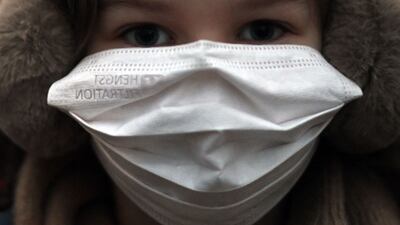
A pupil at the Petri primary school in Dortmund, western Germany. AFP -
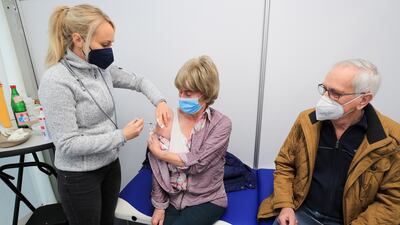
A drive-in vaccination centre at Lanxess Arena in Cologne, Germany. Reuters -
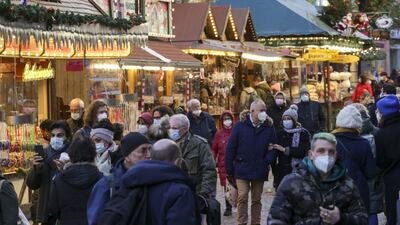
Shoppers in face masks at a Christmas market in Frankfurt, Germany. Bloomberg -
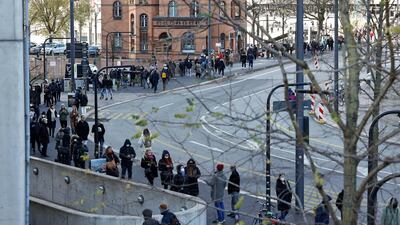
People in a queue reported to be 700 metres long wait to be vaccinated at the Philharmonic Hall in the northern German city of Hamburg. AFP -
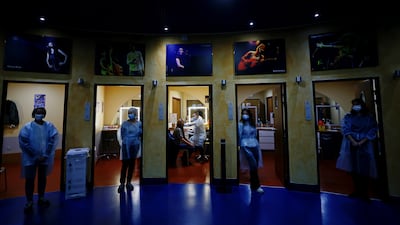
A medical worker administers a vaccine to a patient in a dressing room at the Theatre de Verdure vaccination centre in Nice, France. Reuters -
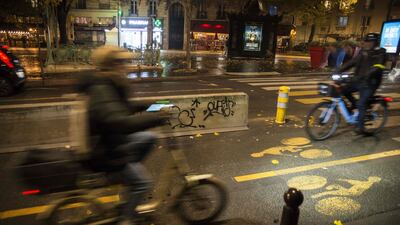
Cyclists on a 'coronapiste', a temporary cycle path created during the pandemic in Paris, France. Mayor of Paris Anne Hidalgo set up about 60 kilometres of new cycling roads to take pressure off public transport during the pandemic. AFP -
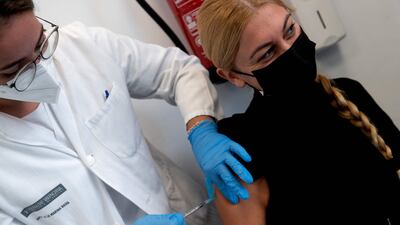
A healthcare worker administers a vaccine during a vaccination campaign for foreign tourists in Benidorm, Spain. AFP -
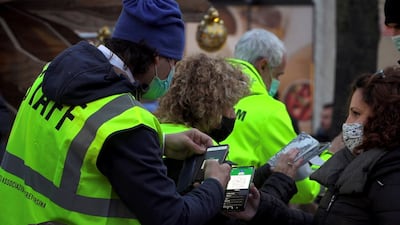
Visitors have their Covid-19 health passes checked at the Christmas market in Trento, Italy, on its opening weekend. Reuters -

Health workers administer booster shots at San Giovanni Addolorata Hospital in Rome, Italy. EPA -

The closed Christmas market next to Stephen's Cathedral, which would normally be packed with crowds of people, in Vienna, Austria. The country is under a nationwide lockdown. AFP -

An unusually quiet street decorated with Christmas lights in Vienna, Austria. AFP -
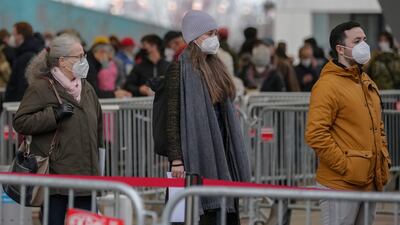
People queue to receive a vaccine in Vienna, Austria. AP -

Police patrol the centre of the northern city of Zwolle, where an emergency order is in force after three nights of unrest in the Netherlands over new Covid-19 measures. AFP


Do you have to stay in the hotel for the duration?
Yes, quarantine must be done in your hotel room or temporary accommodation.
If you are staying at home or with a friend, you may not leave the premises.
Exceptions exist for urgent medical care or if someone is at risk of violence, but most people must stay in place until the quarantine period is over.
Can UK residents finish self-isolation at home?
Yes, preferably using private transport to get there. If you have to use public transport, follow all guidance and regulations on face masks.
Can international visitors return to their home countries?
Yes, but the rules in England require all travellers to book the day 2 and day 8 tests even if they will not be in the country on those days. There is no real way of enforcing they take the test, but they must be booked and paid for.
Travel home will also depend on the home country’s entry requirements and the transport providers’ rules.
Can international visitors transfer to a different hotel?
Travellers are strongly advised to stay in their hotel and not to move, so as to limit the threat of infection to others.
What happens if the self-isolation period is longer than the time you are booked into the hotel?
Extend the stay, if possible, to minimise the risk of infection. If you are travelling to England for fewer than 10 days, you will need to quarantine for the whole of your stay.
You must still book and pay for your day 2 and day 8 travel tests, even if you will no longer be in England on the dates of the tests. You only need to take the tests if you are still in England on those dates.
Who pays for extra nights?
The guest is responsible for paying for extra nights.
How can international visitors return home if they are Covid positive and want to leave the UK?
The best advice would be not to move at all — stay in your place of quarantine and complete the stint to minimise the possibility of infecting others.
Can hotels ask guests to leave if they receive a positive test?
Technically, a hotel is allowed to ask a guest to leave, however the government has issued advice saying people should stay in hotels only if they cannot get home. People staying in hotels after receiving a positive test tend to be those who cannot easily get home.
Guests with confirmed or suspected cases should return home if they can, but this may not always be possible.
Hotels have to work out how to manage the booking. That includes isolation periods, providing meals and how to properly clean after the stay has ended.
Some accommodation, such as any with shared bathrooms, will not be suitable for quarantine.

